
Vinyl
The usual choice in Clark County. Good value, low upkeep.
Window features
This page explains what a quote pays for: the frame material, the glass, the brand, and the window style.
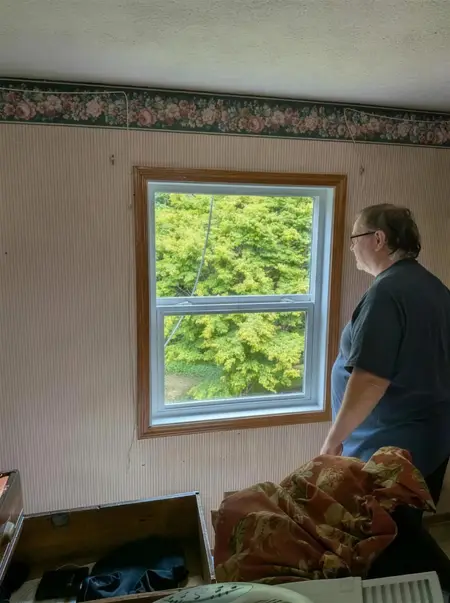
Clearview job photo — finished window from inside the room
Why it matters
Windows are a small part of a house's wall area but a large share of the heat it loses in a Washington winter. A failed seal, worn weatherstripping, or a single pane of glass can all show up the same way: a draft at the lock, a cold spot by the window, and higher heating bills.
Not every window needs replacing. The options below are worth understanding before you buy, whether from us or anyone else.
What it's made of
The usual choice in Clark County. Good value, low upkeep.
Stiffer, holds paint, costs more. Worth it on big openings.
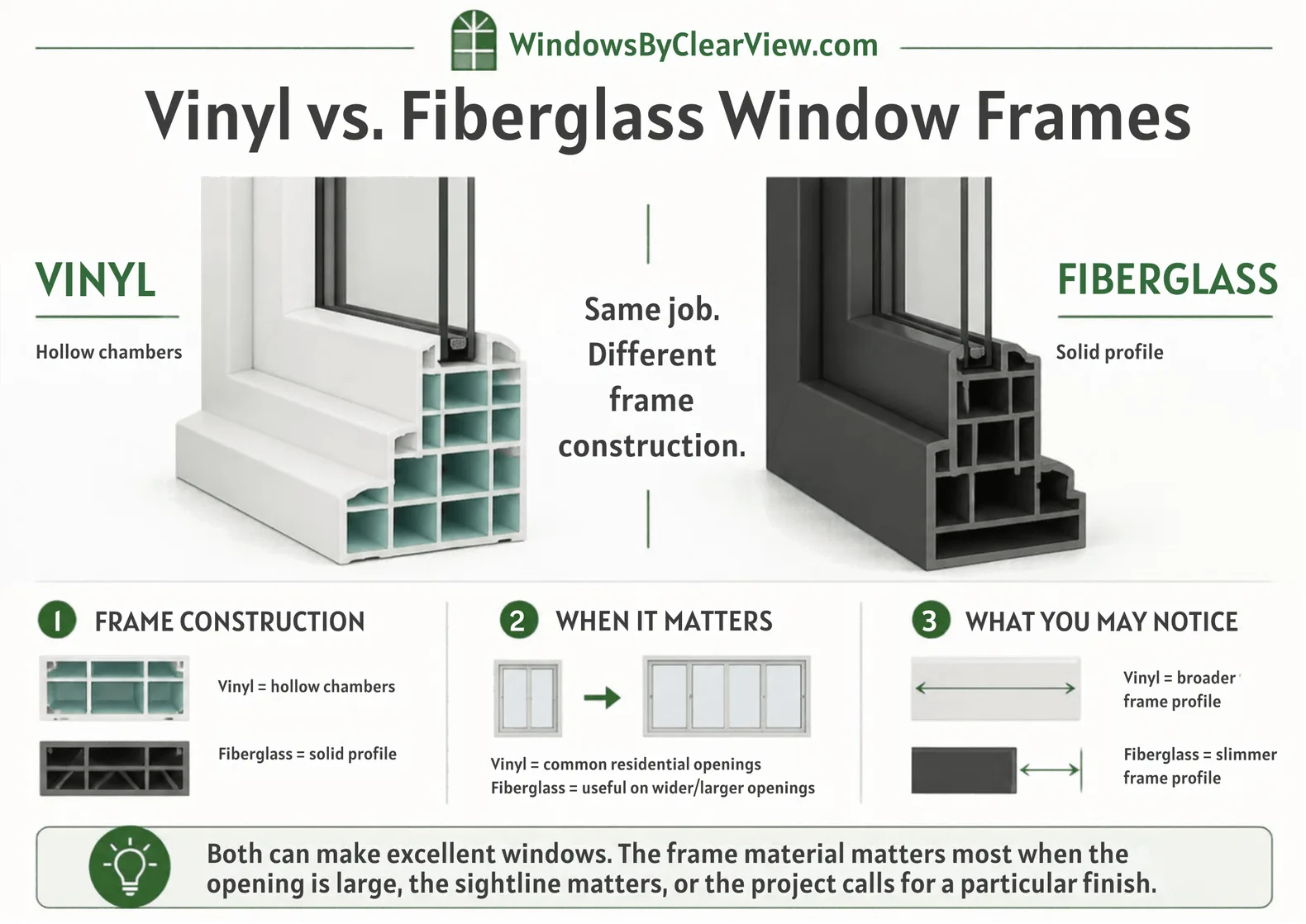
We install both. Vinyl suits most standard openings; fiberglass suits wide sliders and picture windows that might otherwise flex. We recommend one on site, not from a photo.
Which window
The standard window Clearview installs on most jobs.
A step up in the window itself, same install — runs more per opening than Cascade.
The installation is done to the same standard either way; the window in the opening is different. We tell you which one a quote is based on, and why, before anything is ordered.Cascade vs Milgard: where each is made, what each costs, and when the step up is worth it.
Glass
Every window we install has an insulated glass package, double- or triple-pane, with a Low-E coating chosen for a Pacific Northwest heating season.
A cloudy or fogged pane is a different problem: a failed seal, not a coating choice. How to tell the difference.
U-factor
Heat lost through the window — lower is tighter
Below about 0.3 is the range Washington utility rebates usually look for. A typical Clearview double-pane, Low-E install lands near 0.27; triple-pane goes lower still.
SHGC
Solar heat let through — higher means more free heat
This is where climate flips the advice: a hot, sunny region wants SHGC low to keep heat out. Vancouver wants a little more of it on south-facing glass, since that sun is free heat for eight months of the year.
Shapes and operation
The style does not change the glass. It changes how the window opens and how much frame you see when it is shut.
Two sashes, one slides sideways past the other.
Top and bottom sash both move. Usually tilts in to clean.
Only the bottom sash moves. The top half is fixed.
Does not open. Just glass in a frame.
Hinged at the side, cranks outward.
Hinged at the top, cranks out from the bottom.
Projects out from the wall. Its own framing and roof work.
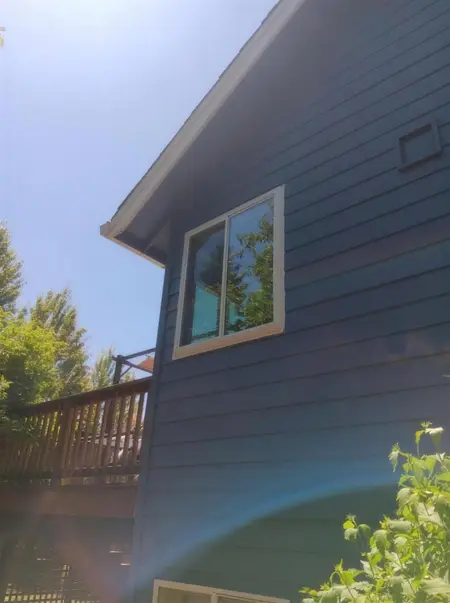
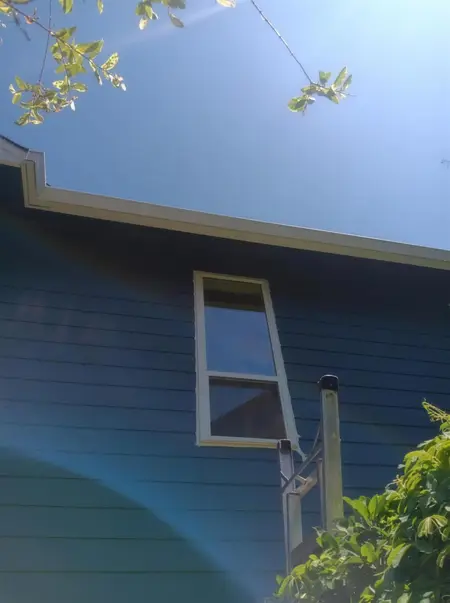
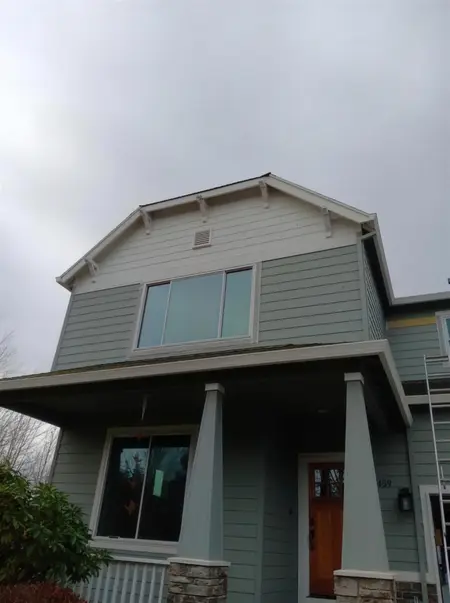
Arches, transoms, and other non-rectangular openings are measured and priced individually. Doors — sliding patio door and french door — are not windows, but we can install them as part of the same project if you are doing a whole side of the house. More on sliding glass doors.
Hardware and color
Locking hardware, interior and exterior color, and grid patterns depend on the line we order, and Cascade's options are not identical to Milgard's. We bring real samples to the measure so you choose from what is actually available.
Warranty
The glass and hardware carry the manufacturer's own warranty, and Cascade and Milgard each write theirs differently. The installation is covered separately by us. Ask us to spell out both before you sign: what is covered, for how long, and who to call.