
AIR
Feel around the sash, meeting rail, lock, and corners with the window closed.
Should you replace?
Six practical signs a Washington home is ready for window replacement — drafts, fogged glass, sticky sashes, soft sills, and uneven rooms.
Photo guide
Use the numbered checks to inspect the opening, then compare multiple signs at the same window.
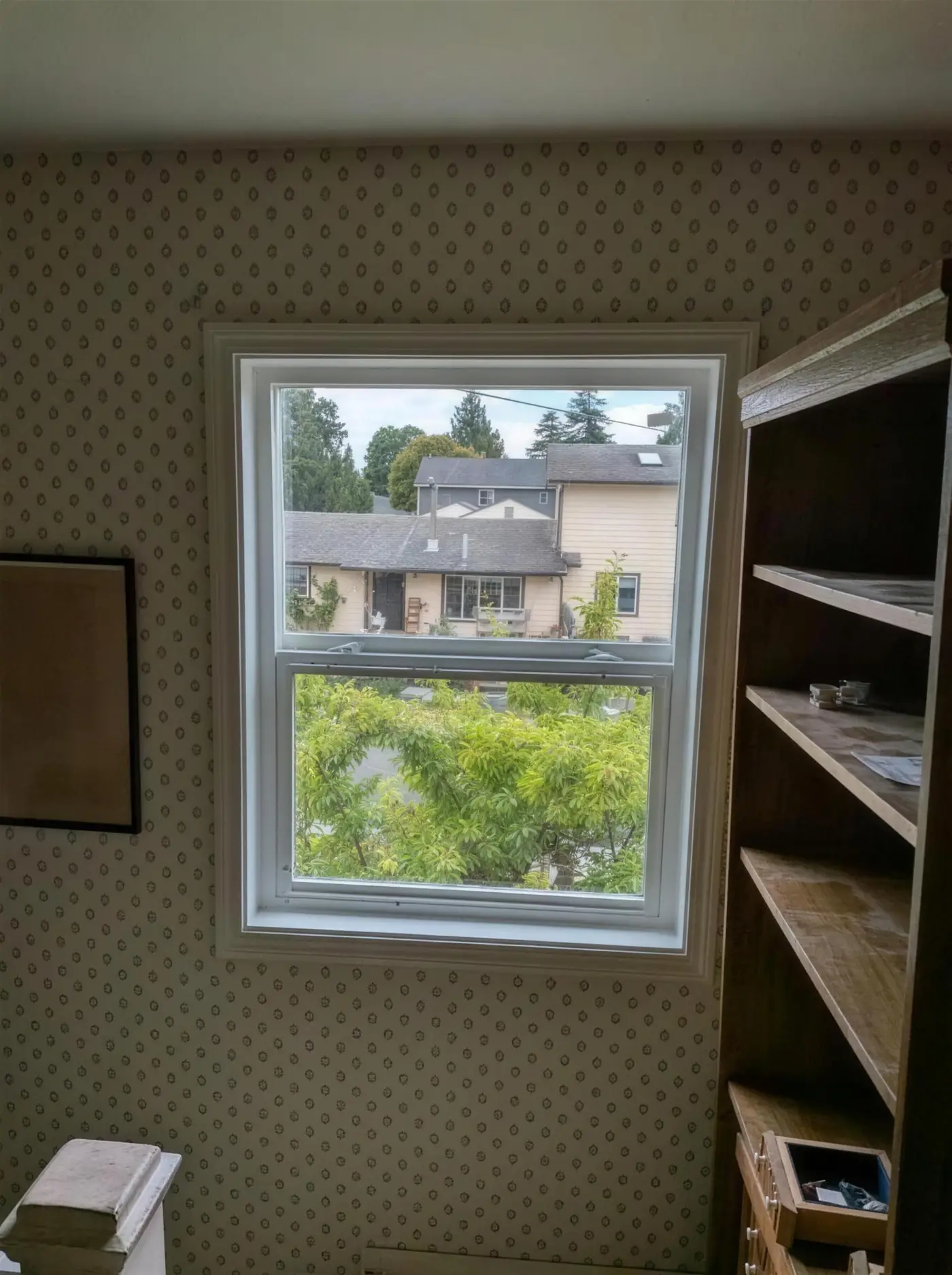
A normal residential opening is a better starting point than a staged “damage” photo. Start with what you can see and touch before deciding what failed.
 CLEARVIEW JOB PHOTO
What to look for
Use the photo to orient yourself, then use the numbered notes to decide what matters at your own opening.
Feel around the sash, meeting rail, lock, and corners with the window closed.
Look for fog that stays between panes after the room-side surface is wiped.
Probe stained or soft areas. Moisture damage changes the scope.
Binding, dropping, or failed locks can point to movement, hardware, or frame condition.
Six signs cover most cases where replacement makes sense, and seeing two or more in the same room is usually the tipping point. Windows rarely fail all at once. They leak a little more air, collect a little more water, and get a little harder to live with. Here is what to check for, room by room.
A working window should not let a draft into the room. If you feel air at the lock, the meeting rail, or the sill, the weatherstripping or the frame is no longer sealing. Over a long Washington heating season, that is money and comfort leaving through the same opening every day.
That cloud sits inside the insulated glass. You cannot wipe it off. The seal has failed, the gas is gone, and the window no longer insulates the way it was built to. See fogged windows.
Paint buildup, swelling, and a frame that is no longer square all show up as a window that is hard to operate. A tune-up is worth trying once. If the opening itself has moved, a new window with the opening corrected (see what each opening needs) is a better fix than another round of planing.
Western Washington rain finds the weak corner of a window. Soft wood at the sill means water has been getting into the opening. Replacement is the chance to flash the opening correctly, not just put a new window into a wet opening.
Old single-pane and aluminum frames create cold glass. The furnace runs and the thermostat reads fine, but the chair by the window is still cold. That is a comfort problem first, and energy savings come along with it.
Windows are a small part of the wall but a large share of heat loss. If the insulation and heating system are already in good shape, leaky windows are a common remaining cause. Replacement will not fix a leaky attic, but it will stop the drafts you can feel.
Not every sign on this list needs action this season. A rough way to sort them:
A soft sill left two more winters usually costs more to fix than the window itself would have.
If two or more of these are true in the same room, a measure is worth the time. Bring a photo of the elevation and a rough count. We will tell you what each opening needs in the written estimate (how we look at it).
Fresh caulk helps a sound unit. If the sash rattles, the glass is fogged between panes, or the frame is soft, caulk is a delay, not a repair.
No. Many homeowners start with the worst rooms — bedrooms, the windward wall, or the fogged units — then finish the house when it fits the budget.
Not always. Moisture on the room side of the glass is often indoor humidity hitting cold glass. Fog between the panes is a failed sealed unit.